
Mark Twain: A Review
A towering achievement in American biography and worthy of chronicling one of the greatest authors that America has produced.

Mark Twain: A Review - Matthew May
The thickness and heft of the over-a-thousand page, three-and-a-half pound block that is Pulitzer Prize-winning biographer Ron Chernow’s much-anticipated work Mark Twain may put one in mind of a piece written by the late Chicago newspaper columnist Mike Royko, whose journalistic bent and perspective Twain may very well have appreciated.
Royko, a Pulitzer Prize winner himself and a Chicago Cubs fanatic, offered his thoughts about a book by Keith Hernandez of the hated New York Mets, who had just won the World Series – the then-elusive and seemingly impossible dream for Cub fans.
The review amounted to a description of his rage at the success of the Mets – throwing the book against the wall, kicking it, and stomping it. Upon discovering that his efforts at destroying it were as futile as his team’s starcrossed efforts, he declared Hernandez’s work to be “A very solid book.”
Solidity is a hallmark of Chernow’s, and his latest bestseller is the product of the most substantial research and mining of the Twain archives at the University of California at Berkeley’s Bancroft Library that include thousands of pieces of personal correspondence and even unpublished manuscripts.
Do not be intimidated or feel reluctant because of the book’s size. In more ways than one, Chernow’s Mark Twain is more than a very solid book.
It is a towering achievement in American biography and worthy of chronicling one of the greatest authors that America has produced – comprehensive, humane, and unfailingly absorbing.
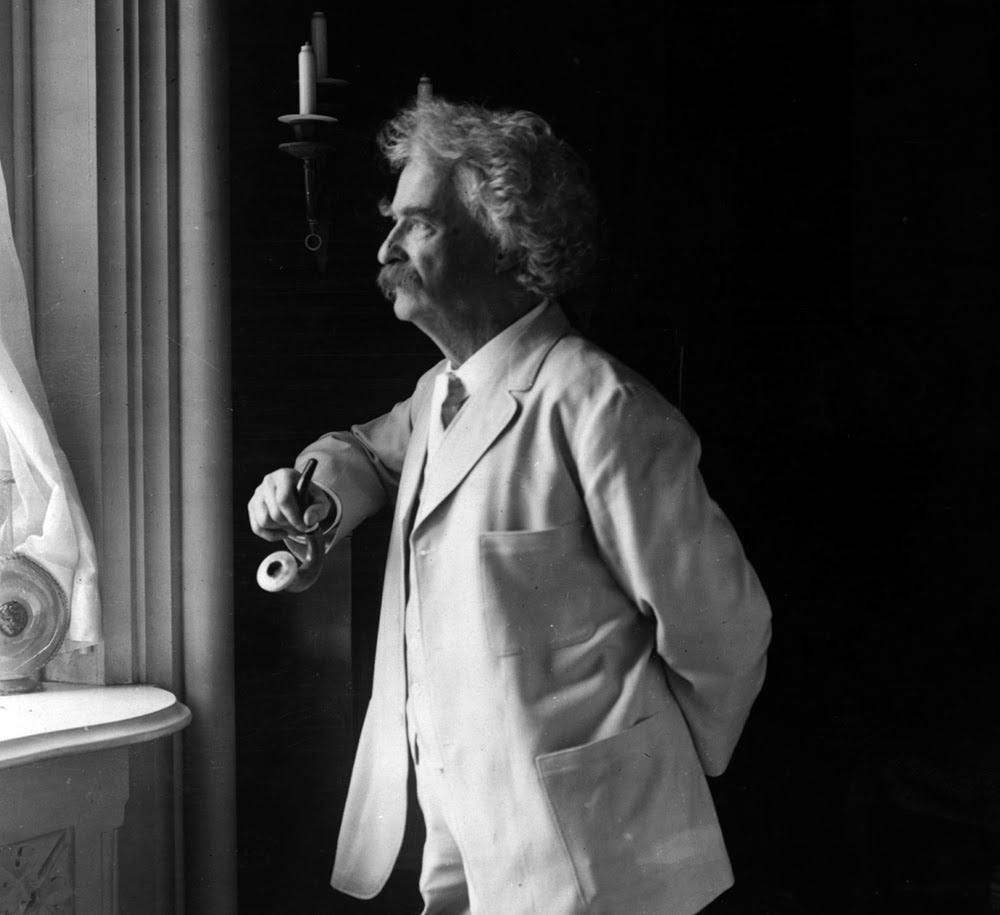
Its length and breadth roughly match the Mississippi River in scope and flow, carrying readers through Samuel Langhorne Clemens’s transformation into the white-suited icon and first celebrity author we know as Mark Twain. Chernow, already the definitive chronicler of Hamilton, Washington, and Grant, brings the same meticulous scholarship and narrative verve to this literary giant.
The result is not merely a life story but a vibrant portrait of 19th-century America itself: its humor, its contradictions, its boundless ambition and heartbreaking costs. What elevates the book above even Chernow’s prior masterpieces is his command of an archive that is as complete a record as conceivable.
Twain left behind the embarrassment of riches alluded to earlier, and Chernow draws on this trove with effortless authority, weaving primary voices into the narrative so seamlessly that Twain himself seems to narrate large stretches. The biographer never drowns in detail; instead, he uses the material to illuminate character at every turn, producing a biography that feels both exhaustive and intimate.
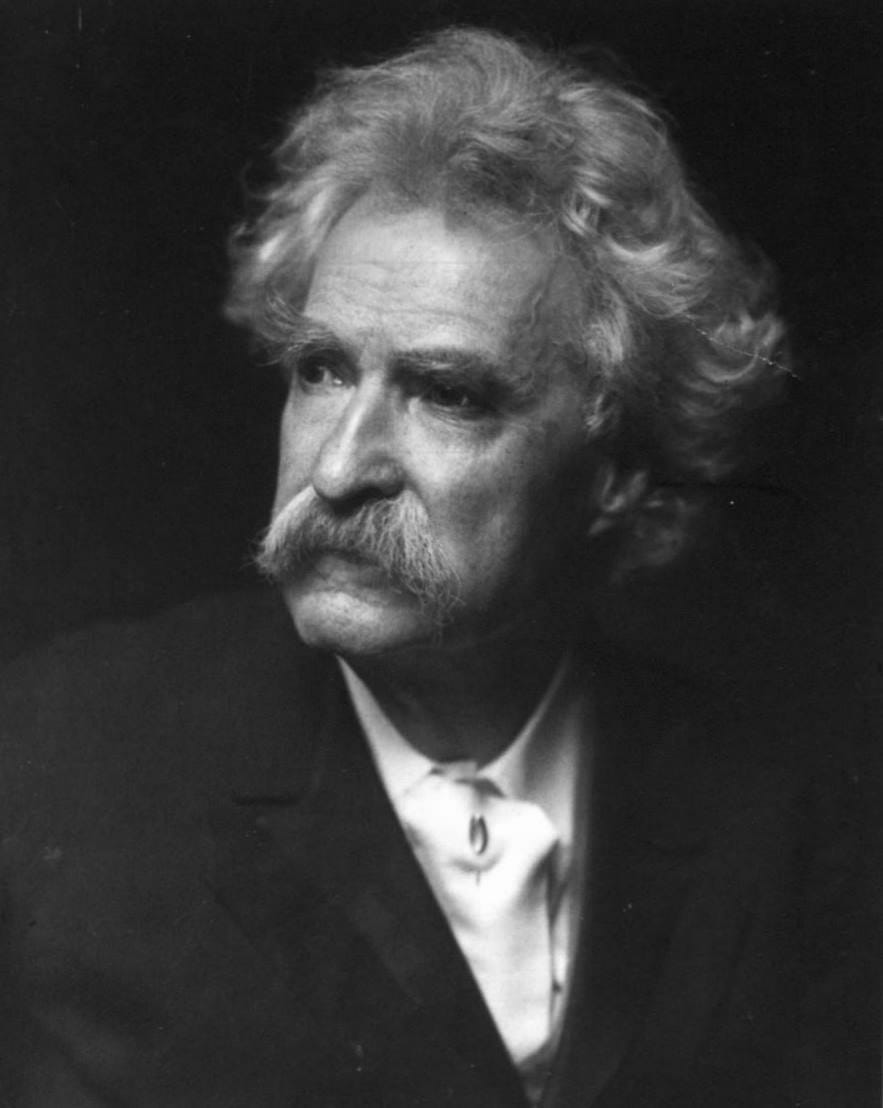
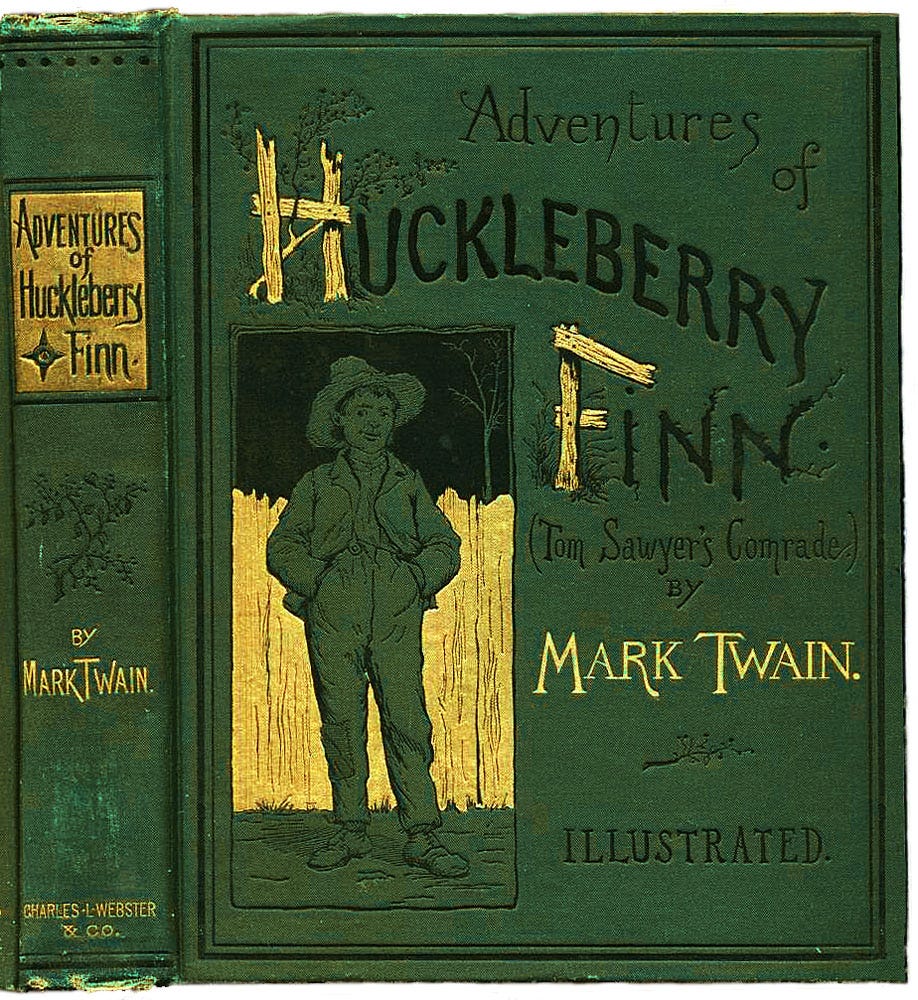
Chernow’s deft and fair analysis of Twain’s writings, interspersed throughout the narrative, is one of the book’s greatest strengths. Rather than segregating literary criticism into separate chapters, he threads incisive readings directly into the life story. Passages about The Adventures of Huckleberry Finn or Life on the Mississippi arrive precisely when the events that inspired them unfold, allowing readers to see how raw experience crystallized into art. Chernow praises Twain’s uncanny ear for noting flaws – racial stereotypes that linger even as the author strains toward enlightenment. The analysis feels balanced: admiring without devolving into hagiography, critical without condescension. It deepens our appreciation of Twain as a craftsman who refined his voice across decades.
Chernow traces Twain’s evolution as a writer with particular skill, showing the boy who piloted steamboats and prospected and wrote in the West maturing into the mature satirist whose work captured the nation’s soul. Parallel to this artistic growth runs a sharpening of political views.
Early Twain was the irreverent Westerner; later, after globetrotting tours chronicled in works such as The Innocents Abroad and Following the Equator, he became a fierce anti-imperialist. Chernow charts the shift masterfully – Twain’s outrage at American adventures in the Philippines and Hawaii, and his blistering attacks on King Leopold’s Congo atrocities. The biographer links these stances to Twain’s deepening cynicism about power and corruption, yet he never lets the politics overshadow the humor that made Twain beloved.
Twain’s expanding celebrity enabled him to foster relationships with some of the most remarkable figures of his day, including the likes of Helen Keller, John Hay, a young Winston Churchill, and the criminally underappreciated William Dean Howells. Among the most remarkable associations was his bond with the aforementioned Ulysses S. Grant. Chernow brings special insight here.
The two men – Union war hero and Confederate malingerer – formed an improbable friendship that culminated in Twain’s publishing house issuing Grant’s Personal Memoirs. Universally regarded as one of the greatest ever written, the memoir rescued Grant’s family from poverty and temporarily established Twain’s reputation as a businessman. Their collaboration glows with mutual respect and shared purpose; Chernow correctly renders it as a high point of 19th-century letters.
Equally compelling is Twain’s evolution concerning matters of race and ethnicity. Born into a slave-owning Missouri family, the young Clemens absorbed the era’s prejudices. Chernow charts a genuine, if imperfect, awakening. Regarding black Americans, Twain moved from casual stereotypes to profound empathy – befriending Frederick Douglass, financially supporting black students, and crafting Jim in Huckleberry Finn as a figure of dignity, though balking at publicly railing and publishing against the scourge of lynching as he did in private correspondence and conversation.
Twain’s views about Jews shifted from early caricatures to admiration and defense against pogroms. With Native Americans, late-life writings show growing sympathy, though Chernow honestly records lingering blind spots. The biographer handles these transformations with nuance, crediting Twain’s “enormous goodwill” while acknowledging language that still jars modern readers. The result humanizes rather than excuses, presenting a man who outgrew his time even as he remained marked by it.
As mentioned, this book is no paean, and Chernow has no trouble inducing exasperation with Twain, notably through Twain’s harebrained business ventures – a fascinating counterpoint to his literary triumphs. None looms larger than the Paige compositing machine, that mechanical white whale into which Twain poured and lost a fortune, the story of which may tempt a reader to emulate Royko and toss and kick the book about the room.
Chernow details the obsession with quiet horror: the endless prototypes, the investor pitches, the crushing realization that the contraption could not even reliably typeset a period. Readers will find themselves groaning aloud as Twain, convinced he would revolutionize printing and rival Carnegie, watches his wealth evaporate. Other schemes – marine telegraphs, patent medicines, even Plasmon milk powder – follow in tragicomic procession. Chernow’s restraint only heightens the frustration; he lets the facts speak, turning financial folly into a cautionary subplot that underscores Twain’s restless genius and fatal optimism.
Yet the book’s emotional core lies in the depth of feeling Twain harbored for his immediate family. Chernow portrays his undying love for wife Olivia “Livy” Langdon as the steady anchor of a chaotic life. Livy was editor, muse, and moral compass; their marriage, spanning four decades, pulses with tenderness even amid hardship. The crushing guilt and sorrow Twain felt at the deaths of his daughters and his wife emerge with heartbreaking power. Susy’s sudden passing in 1896, while the family was abroad trying to recoup losses, shattered him. Chernow links the grief directly to Twain’s poor business decisions: the bankruptcy that forced the family to abandon their beloved Hartford mansion, that “loveliest home there ever was.”
The guilt was unrelenting; Twain blamed himself for uprooting them, for prioritizing fortune over stability. Chernow renders these passages with quiet compassion, showing a humorist whose private world was steeped in tragedy.
In the end, Mark Twain succeeds because Chernow refuses to flatten his subject. He gives us the showman and the sufferer, the genius and the gambler, the evolving conscience and the perpetual boy. Drawing on that fathomless archive, he has produced a biography worthy of its larger-than-life subject—one that illuminates not only a writer but the America he helped define.
For anyone who cherishes Twain’s humor or ponders his complexities, Chernow’s book is essential reading and more than just solid. It flows like the river Twain loved: deep, turbulent, and impossible to hold back.
SEE ALSO: